

How to choose the right sunscreen and swim with peace of mind in Ishigaki
The Environmental Impact of Sunscreens on Marine Ecosystems
The Japanese government has not banned chemical filters (such as oxybenzone or octinoxate) at a national level, unlike Hawaii or Palau. Yet, sunscreen filters dissolved in the water do not just alter the beauty of the reefs; they also disrupt the biological cycles of marine species.
◆ Lightning-Fast Bleaching: Corals live in symbiosis with microscopic algae called zooxanthellae, which provide them with nutrients and their vibrant colors. Certain chemical filters awaken or activate latent viral infections within these algae. Once sick, the algae are expelled by the coral. Deprived of its primary food source, the coral bleaches and can starve to death in as little as 48 hours.
◆ The Skeletal Trap for Larvae: Studies demonstrate that compounds like oxybenzone act as endocrine disruptors on coral larvae (planula). They trigger premature calcification and anatomical deformities. As a result, the larva becomes literally trapped inside its own skeleton, preventing it from settling onto a reef to grow.
◆ Genetic Damage: These chemicals alter and damage coral DNA, which drastically reduces their life expectancy and blocks their reproductive cycles.
◆ Global Ecosystem Impact: The pollution does not stop at corals. It impairs photosynthesis in green algae, causes deformities in sea urchins and dolphins, and decreases fish fertility. At the top of the food chain, these toxins accumulate in the seafood that humans consume.

White coral reef in Ishigaki

Coral bleaching, Ishigaki

Sunscreens to Ban: Conventional Chemical Filters
The majority of mainstream sunscreen brands use synthetic filters designed to absorb UV rays directly within the skin. These specific molecules happen to be the most destructive to the ocean.
When shopping, carefully check the ingredient list on the back of the tube. Absolutely avoid products containing:
1. Oxybenzone (or Benzophenone-3): The most toxic filter, heavily regulated or banned in several regions around the globe.
2. Octinoxate (or Ethylhexyl Methoxycinnamate): A proven disruptor of marine reproductive systems.
3. Octocrylene: Particularly deadly, it accumulates irrefutably in coral tissues in the form of toxic fats.
4. Homosalate & Avobenzone: Substances that degrade rapidly in the sun and generate toxic byproducts for aquatic ecosystems.
5. Parabens (Butylparaben, Methylparaben...): Used as preservatives, they directly promote the rapid bleaching of coral. [1, Note: Sprays or aerosols should also be avoided. Much of the product falls back onto the sand, joining the ocean at high tide and contaminating sea turtle nesting areas.
Options to Prioritize: "Non-Nano" Mineral Filters
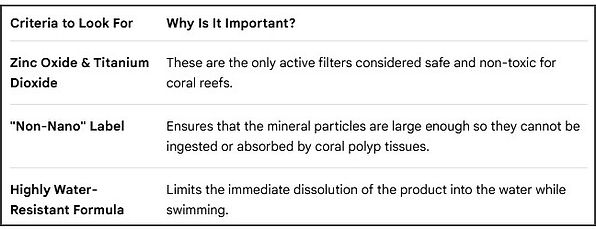
To protect the reefs, the scientifically validated alternative relies on mineral (or physical) sunscreens. Unlike chemical filters, minerals act as a shield that reflects UV rays right off the surface of the skin.

This "Kids Pure Milk" sunscreen from the Japanese brand Biore is an excellent compromise.
Available in supermarkets at a reasonable price, here are its benefits:
-
Mineral-only formula
-
Complete absence of harmful chemical filters
-
Zero chemical UV absorbers
-
Alcohol-free, gentle on sensitive skin

The Best Approach Remains Wearing a Full Rashguard
Since no sunscreen is completely biodegradable or entirely free of environmental impact, the scientific community agrees on the best approach: reduce sunscreen use by covering up.
By wearing a UV-protection swim shirt and leggings (a full rashguard with a thickness of about 1 mm) along with a swim hat, you instantly protect over 70% of your body. You then only need to apply mineral sunscreen to the remaining exposed areas (face, neck, ears, and the backs of your hands). Finally, make sure to apply your sunscreen 20 minutes before swimming to allow it time to dry and properly adhere to your skin, which significantly limits its spread into the aquatic environment.
